Measurement
Why your dashboard lies, how to test conversion tracking end to end, and the bot traffic quietly inflating your analytics.
The Google Ads guide for ecommerce store owners.
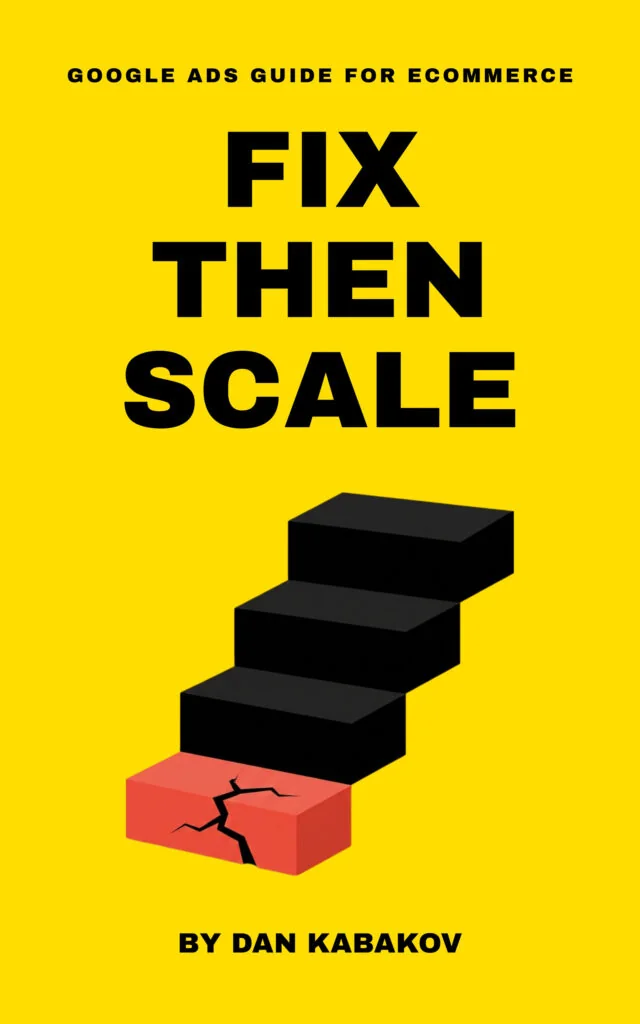
Your dashboard says the ads are working. Your bank account isn't so sure. This book shows you what to fix, in what order, and when you're actually ready to scale.
Why your dashboard lies, how to test conversion tracking end to end, and the bot traffic quietly inflating your analytics.
Merchant Center is the half of Shopping nobody manages. Disapprovals, variants, and the feed hygiene that decides your auctions.
The 4-campaign structure, brand vs non-brand separation, Shopping vs Performance Max, keywords, match types, and negatives.
What your ad actually says, where the click lands, and how to tell a copy problem from an offer problem.
Budgets, Smart Bidding and the learning period, scaling without tanking ROAS, and the emergency checklist for sudden drops.
Where AI compresses hours of account work into minutes, the 5 ways it breaks, and the rule that makes it safe on real money.
This book is for ecommerce store owners and founders doing roughly $500K to $10M a year who either run their own Google Ads or pay someone to run them.
If you manage the account yourself, this is the operating manual. If you hire help, it's the literacy that turns you from an audience for screenshots into a client who asks questions with specific answers. Every chapter ends with something you can check in your own account within minutes.
Fix Then Scale: Google Ads Guide for Ecommerce is a 2026 book by Dan Kabakov, founder of Online Labs and a Google Partner certified consultant with 10 years of ecommerce Google Ads experience. The book teaches store owners a fix-first order of operations: verify conversion tracking, repair the Google Merchant Center product feed, structure campaigns around brand and non-brand traffic, choose between standard Shopping and Performance Max, write ads and landing pages that match, and only then scale budgets. It covers real client cases including a jewelry brand scaled 18x in ad budget at 4.5x sustained ROAS, and a full chapter on using AI for Google Ads account audits. Available on Amazon in paperback ($19.99) and Kindle ($9.99).
Every engagement starts the way the book does: verify the measurement before trusting a single number in the account.
Budgets follow buyer intent, in a structure where brand, prospecting, and retargeting each have their own job and their own numbers.
Budget increases come in steps, earned by weeks at target, with the learning period respected. That's how 18x happened.
Client results shown are from real engagements. Clients are anonymized in the book to protect confidentiality. See case studies.


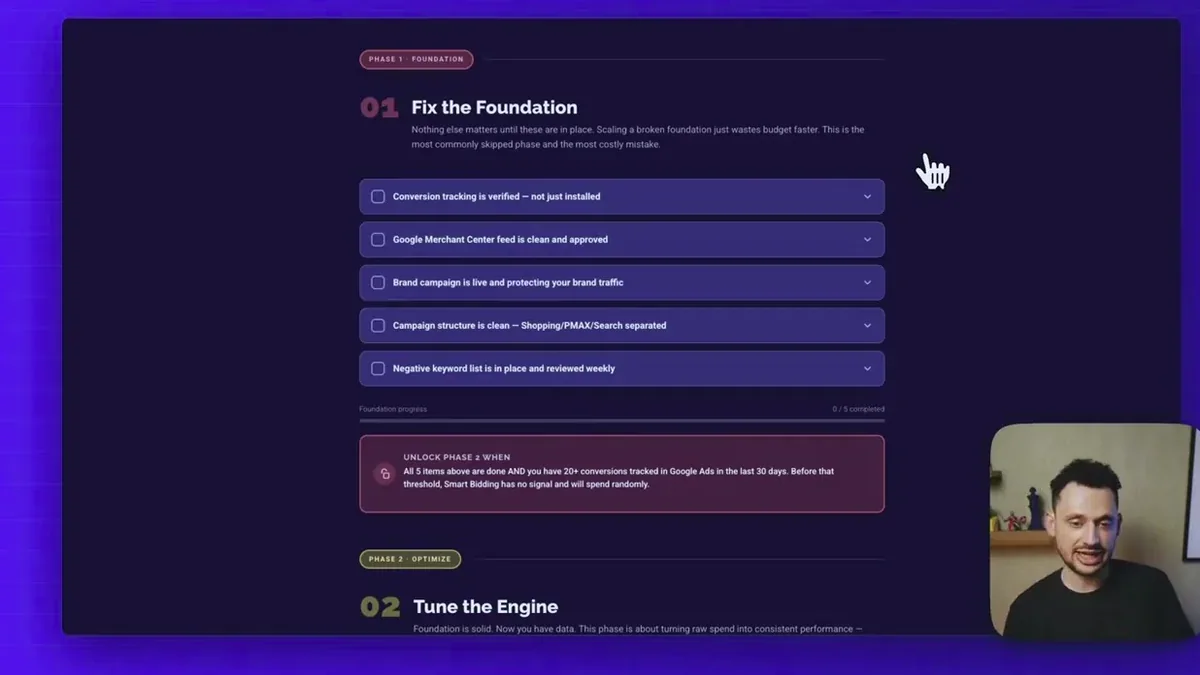
Swipe for all 3
 Google PartnerCertified since 2016
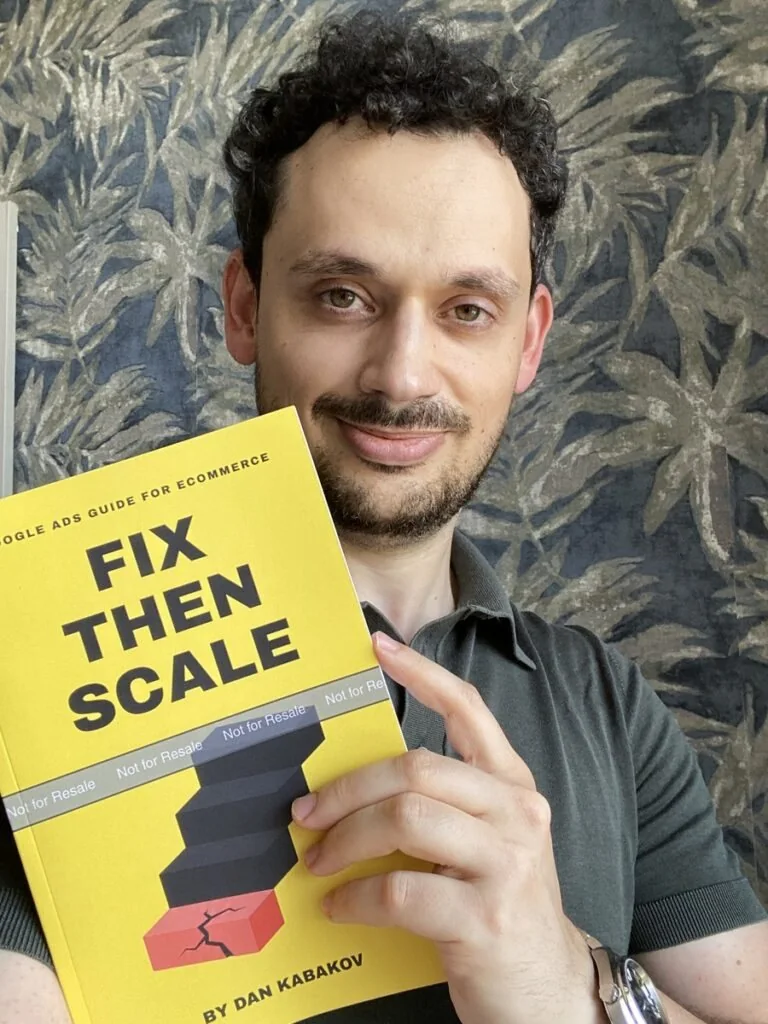
Dan is the founder of Online Labs, a Google Partner certified consultancy for ecommerce brands. He has spent 10 years hands-on in Google Ads accounts, specializing in fine jewelry and other considered-purchase categories where customers think for weeks before spending four figures.
He builds his own AI tooling and is blunt about what it can and cannot do. Everything in the book comes from accounts he personally managed, including the wreckage.











The Google Ads Masterclass covers the same system as the book, taught screen by screen inside real accounts.
It assumes you have a live Google Ads account with real money moving through it, or you're about to. You don't need to be a PPC professional. The book was written so a store owner can act on every chapter without hiring anyone.
It's written for stores doing roughly $500K to $10M a year, and the reasoning holds on either side of that range. Small accounts get a dedicated treatment of how the rules bend under $1,000 a month of ad spend.
Yes. A full chapter compares standard Shopping against Performance Max with a decision framework based on your conversion history, sales cycle, margin, and how much management time you actually have.
The final part covers using AI on your own account: what it does well, the 5 specific ways it breaks, and the verification rule that makes it safe to use on real money. AI is the power tool. It is not the hand holding it.
The book is deliberately built around decisions rather than buttons: which number to distrust, what evidence clears the bar for acting, when to do nothing. Google keeps redesigning the interface. The reasoning survives every redesign.
On Amazon, in paperback ($19.99) and Kindle ($9.99). The Kindle edition is included in Kindle Unlimited.
We use cookies for analytics, to see how the site is used. They stay off until you accept. Cookie policy